Psychedelic Culture Returns to the Bay, As Stakes Around Access Grow
Published in DoubleBlind Mag
Psychedelic Culture returns as access, borders, and Indigenous participation tighten.
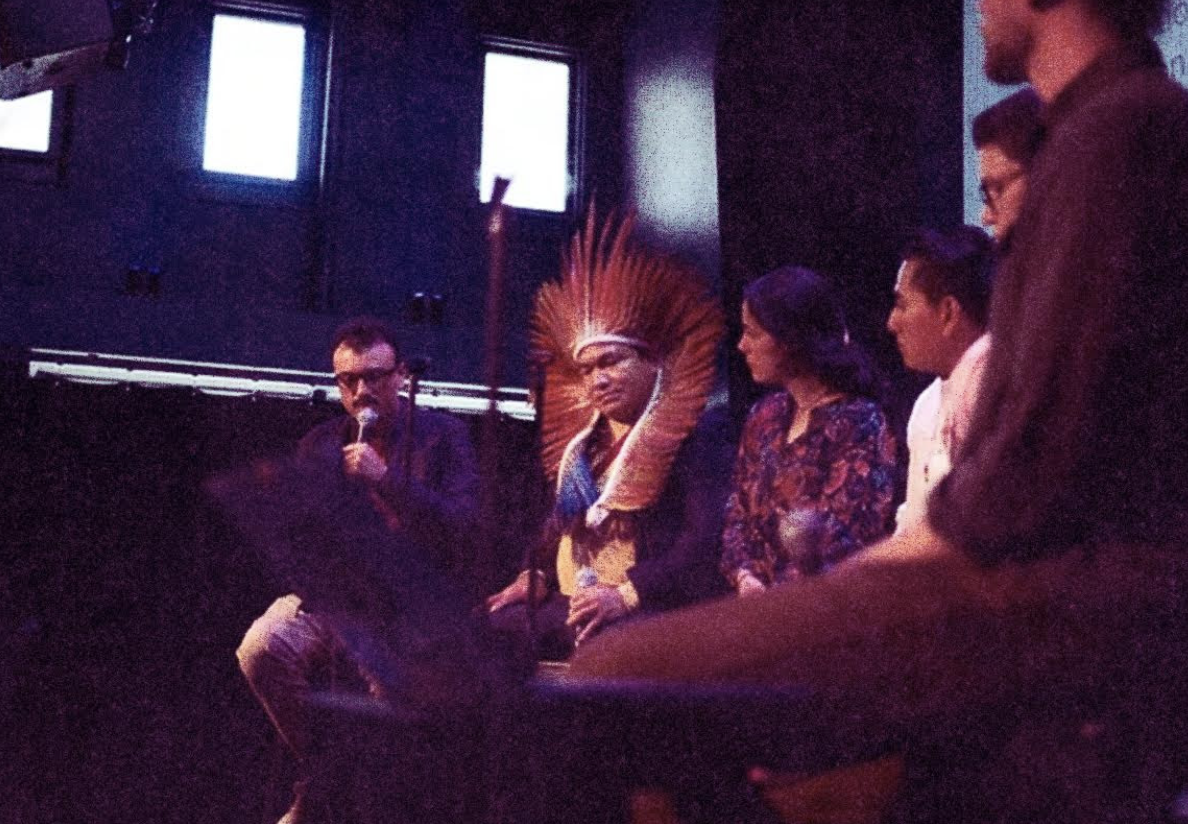
From April 17 to 19, 2026, the Chacruna Institute will bring Psychedelic Culture back to San Francisco’s Brava Theater, bringing together more than 200 speakers across three days of programming. The conference comes at a pivotal moment in which psychedelics are being funneled into clinical pipelines and getting boxed in by regulatory frameworks. But that’s only a fraction of what’s happening — and what’s at stake — in the psychedelic field, particularly when it comes to Indigenous practices and plant medicine traditions.
The stakes are obvious, and they don’t necessarily only have to do with access. In a recent email sent to attendees, organizers of the conference flagged the possibility of encountering U.S. Immigration and Customs Enforcement (ICE) while traveling or moving through public spaces, particularly in the airport, where ICE has recently posted up to apprehend migrants.
“While there are no known or planned immigration enforcement operations tied to conferences or events,” the message read, “federal agencies may still be present in public spaces.” It then outlines immigrant rights should an ICE confrontation occur. “You are not required to answer questions about your immigration status in most situations, [and attendees] have the right to remain silent and the right to ask if you are free to leave.”
While an ICE warning may seem extreme, the reality is that an international conference, especially one that’s rooted in Indigenous and Global South participation, now carries a new layer of responsibility. The notice is both a precaution and a signal, reminding us that movement across borders, and especially for a psychedelic and plant medicine conference, is increasingly fraught.
“Chacruna’s mission is uplifting marginalized voices in the field of psychedelic science. We were born in Mexico, and we are Latin, we are a very diverse community, and our team and speakers come from all over the world,” says Bia Labate, the executive director of the Chacruna Insitute, who is hosting the conference. “We need to protect them during these unprecedented times in the United States. We also took a proactive approach to reducing waste (by using no gift bags or printed programs and recycled materials). Chacruna sets trends in the field, and we hope folks follow us.”
Protection, in this context, means safeguarding forms of knowledge that are regularly sidelined as psychedelics and plant medicine are folded into Western frameworks. That’s why Chacruna is moving forward with another round of the conference.
“The advancement of the medical use of psychedelics through the FDA process has proven to be more complicated than some wanted, and will tend only to a small minority,” Labate tells DoubleBlind. “Regulated access and religious and community use seem to be the future of the psychedelic movement. Chacruna has been a historical leader in these areas, and we need to continue to guide the field on how to better steward these real-world uses forward.”
As legal frameworks come online and biotech companies push psychedelic drugs to market, the conversation among the people is shifting toward community-based use and religious contexts, and the ethical questions that come with both. “We need to support communal uses and psychedelic churches' best practices, fight for religious freedom, and center harm reduction, ethics, justice, equity, and reciprocity,” Labate says. “Chacruna’s main mission is education, and we educate the field through our conferences.”
Where Chacruna excels is in its commitment to educating the broader psychedelic field about Indigenous cultures, while standing firm despite the tensions inherent in that work. “The psychedelic movement urgently needs to learn from Indigenous people, repair epistemicide and support their political struggles,” Labate says. “However, we have also seen a concerning trend in the field of treating Indigenous people as saviors of humanity and messiahs of a new era.”
Instead of flattening those perspectives into something symbolic, Psychedelic Culture leans into the diversity, nuance, and even contradictions that exist across communities. “Chacruna is about bringing many voices and perspectives together and never losing critical thinking,” Labate says. “We named the conference Psychedelic Culture as we want to re-center dialogue from science to culture. Culture is bigger than science, and embraces science.”
That shift shows up in the structure of the event itself, which incorporates panels, lectures, and more experiential formats that engage participation beyond a purely academic lens. “PCU brings joy and celebration, and gives us a chance to be in community during these troubling times,” Labate says. “PCU is also about recognizing embodied forms of knowledge and cultural modes of perception as legitimate ways of knowing and being in the world.”
Taken together, the conference is a gathering and an intervention. It is an effort to hold open a space that is becoming harder to maintain, one where culture is not an accessory to science but rather the ground it stands on. At the same time, the ICE advisory lingers in the background, a quiet acknowledgment that even the act of coming together now carries added weight.
“We also want to raise awareness around what happens with the knowledge produced by psychedelic science, and how this impacts local communities on the ground,” Labate says.
In 2026, those questions are no longer abstract. They are logistical, political, and immediate, shaping not just the future of psychedelics, but who is able to participate in it at all. If you want to attend the conference or learn more, click here.